- Zahnärzte Dres. Zimny & Kollegen
-
Uhlandstr. 53
10719 Berlin-Wilmersdorf - [email protected]
- 030 889 20 20 0

Seit über 30 Jahren ist die Implantologie eine anerkannte Fachrichtung der Zahnmedizin, die nicht nur über Langzeiterfahrungen, sondern auch nachweisbar über funktionelle und ästhetische Langzeiterfolge verfügt.
Aktuelle Untersuchungen zeigen, dass über neunzig Prozent der Implantate auch nach 10 Jahren noch vollständig intakt sind.

Wie bei jedem anderen operativen Eingriff auch, kann es in sehr seltenen Fällen zu Schmerzen, Schwellung, Wundinfektionen oder Verletzung von Nachbarzähnen kommen.
Gefühlsstörungen der Unterlippe, Zunge, Wange, Kinn oder der Zähne sind ebenfalls sehr selten und in den allermeisten Fällen nur vorübergehend.
Bei Risikogruppen wie Rauchern oder Diabetikern kann es in sehr wenigen Fällen vorkommen, dass das Implantat nicht korrekt einheilt und vom Körper abgestoßen wird.
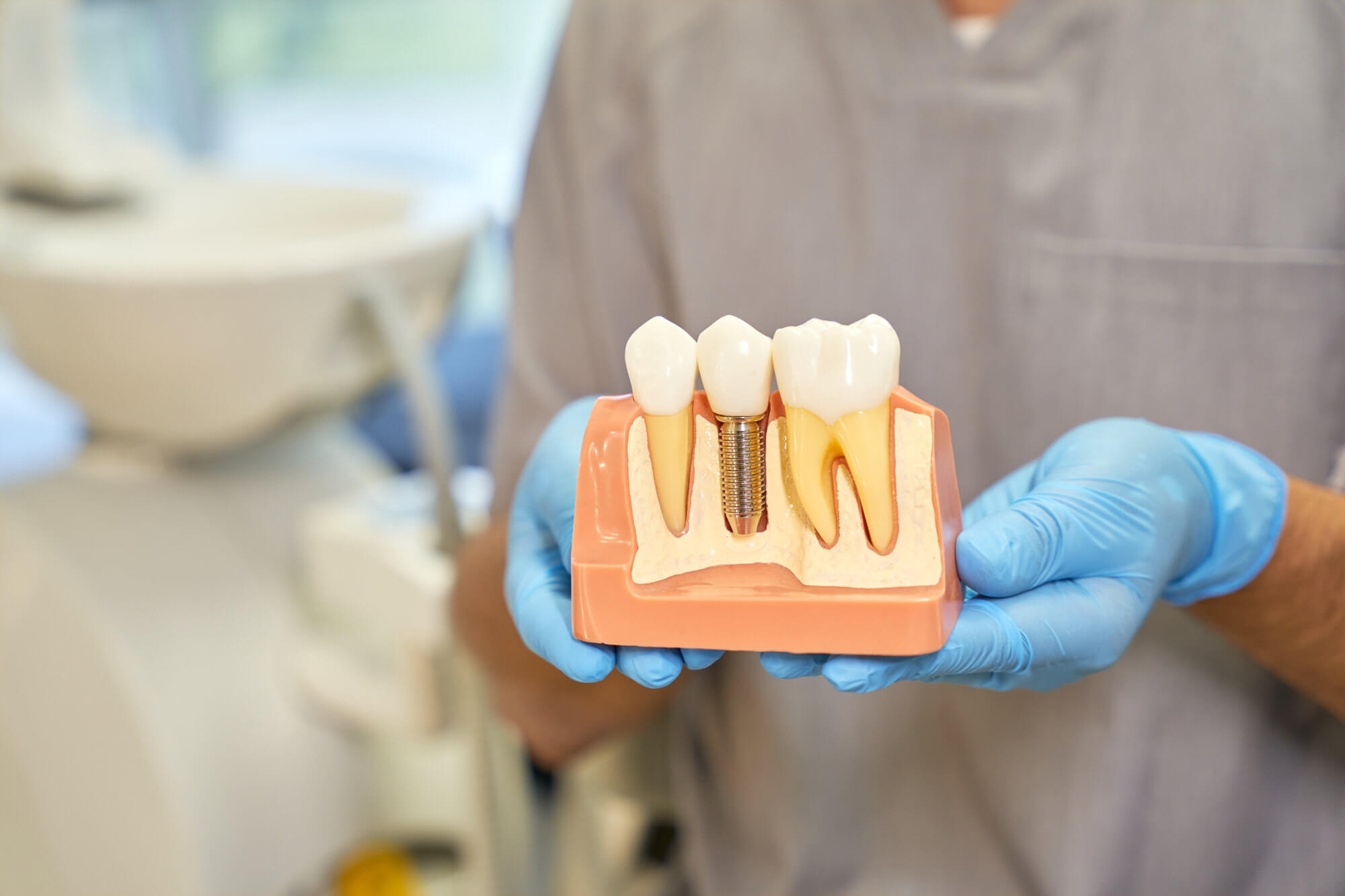
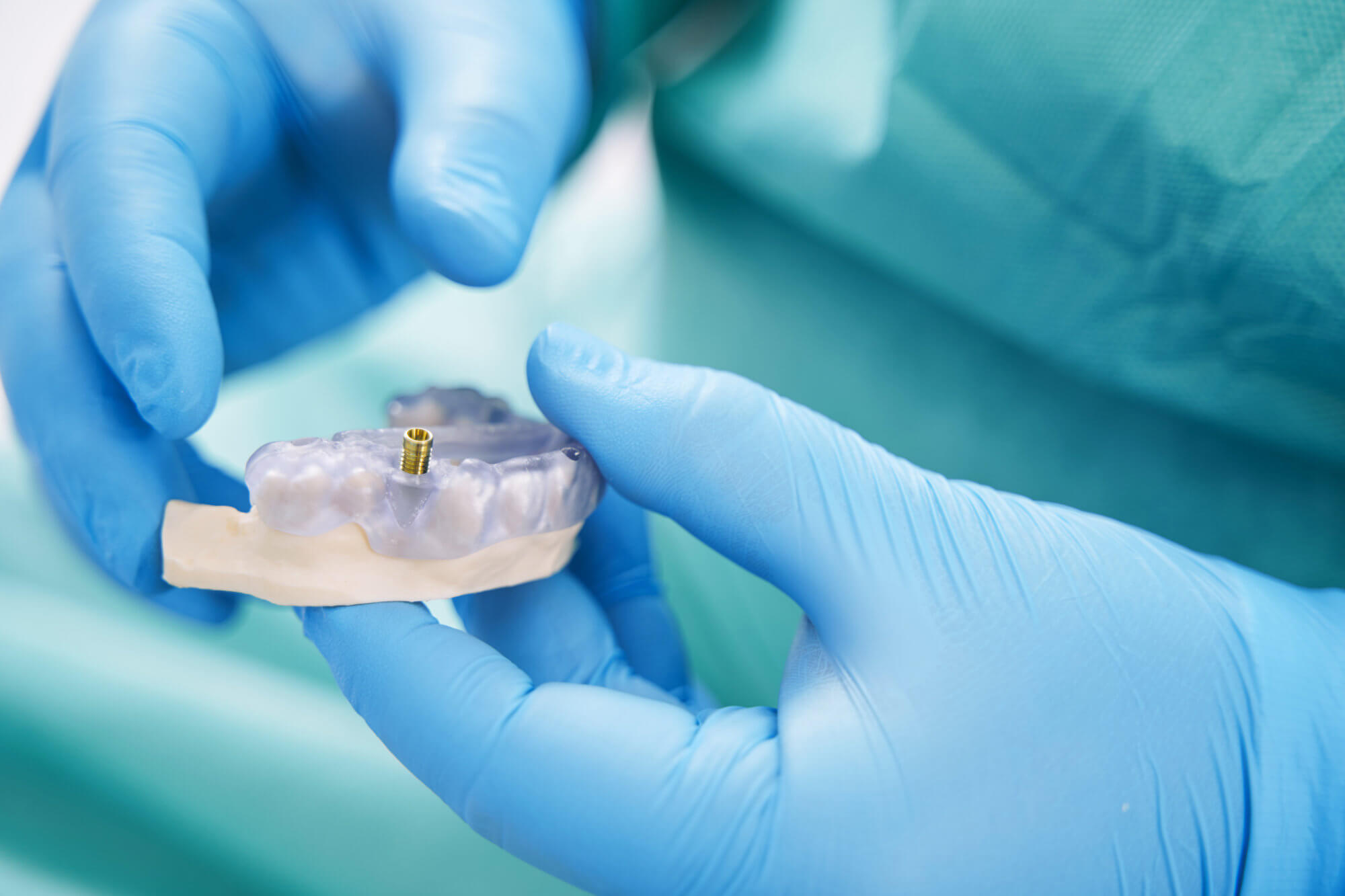
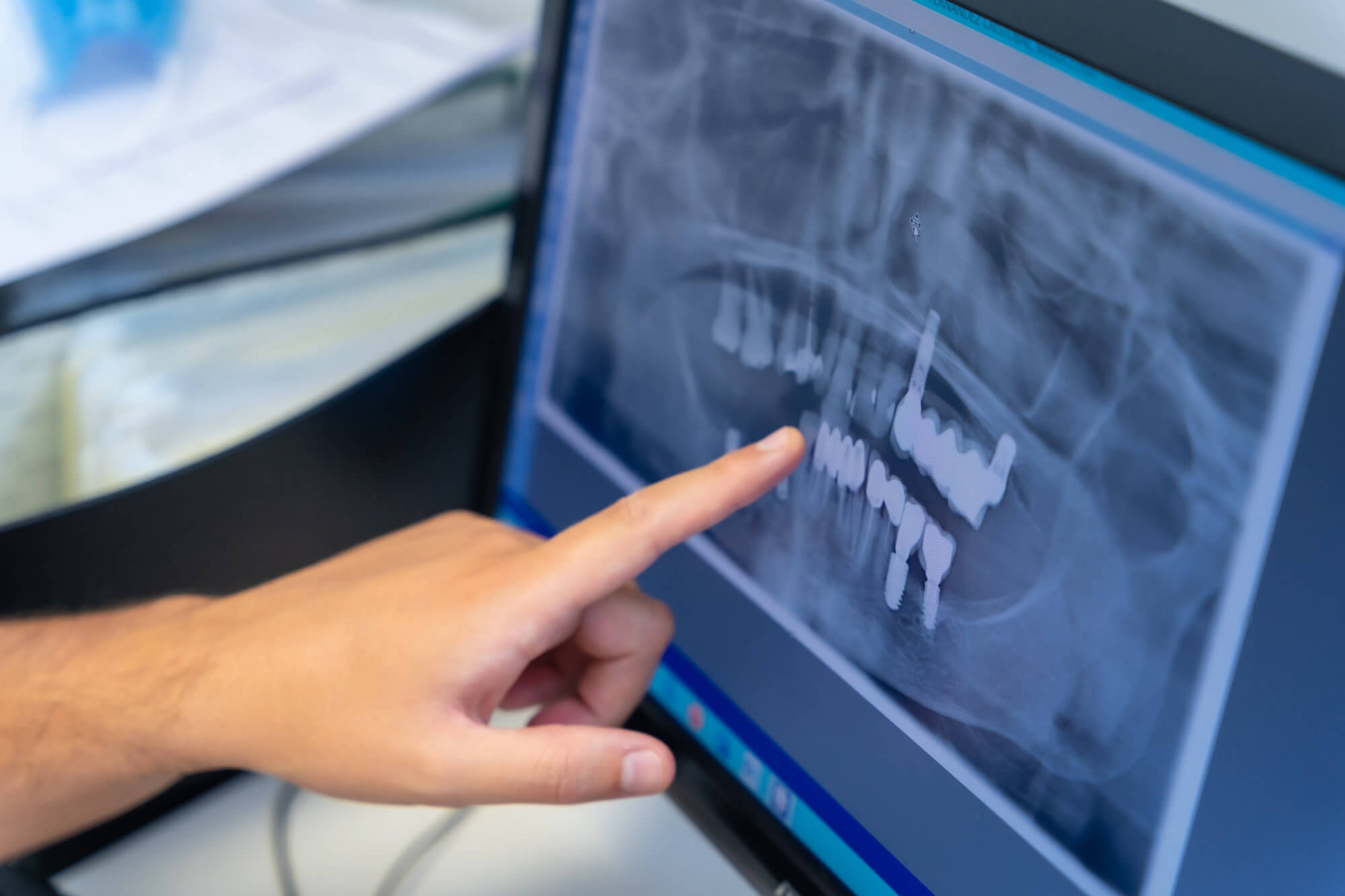
Wenn das Knochenangebot für das Einsetzen eines Implantates nicht ausreicht, kann der Knochen durch einen Knochenaufbau mit eigenem, transplantierten Knochen, mit Knochenersatzmaterial oder im Oberkiefer durch Anheben des Kieferhöhlenbodens vermehrt werden.
Dies erfolgt entweder gleichzeitig mit der eigentlichen Implantation oder vorher, in einer getrennten Operation.
Sollte das Zahnfleisch durch eine Parodontitis erkrankt sein, hat es sich eventuell soweit zurückgezogen, dass es zum operativen Decken eines Knochenaufbaus oder einer Implantation nicht ausreicht. In diesem Fall wird Ihr Zahnarzt vor dem Einsatz des Implantates ein Weichgewebsaufbau durchführen.
Dieser Vorgang erfolgt ebenfalls entweder gleichzeitig oder in einer getrennten Operation.
„Ist ja irre!” Frank Liesegang grinst in den Spiegel, zieht seine Lippen zurück, dreht den Kopf nach allen Seiten. Endlich Zähne. Der Patient umarmt seinen Arzt, empfindet ein Glück – so aufrichtig, so unverstellt, dass niemand behaupten kann, es träfe den Falschen.
Dieser kurze Erlebnisbericht ist symptomatisch für unsere Erlebnisse mit Implantat-Patienten. Zugegebenerweise handelte es sich bei diesem Fall um ein extremes Beispiel eines Berliner Kraftfahrers, der durch eine eitrige Kiefererkrankung alle Zähne verlor.
Aber auch viele unserer anderen Patienten mit Zahnimplantaten wissen nur Gutes über ihre neuen Zähne zu berichten. Sie schmiegen sich in Form und Farbe harmonisch in das natürliche Gebiss ein, fallen somit nicht auf, sind genauso gut zu reinigen wie die normalen Zähne auch und funktionieren im täglichen Einsatz problemlos.
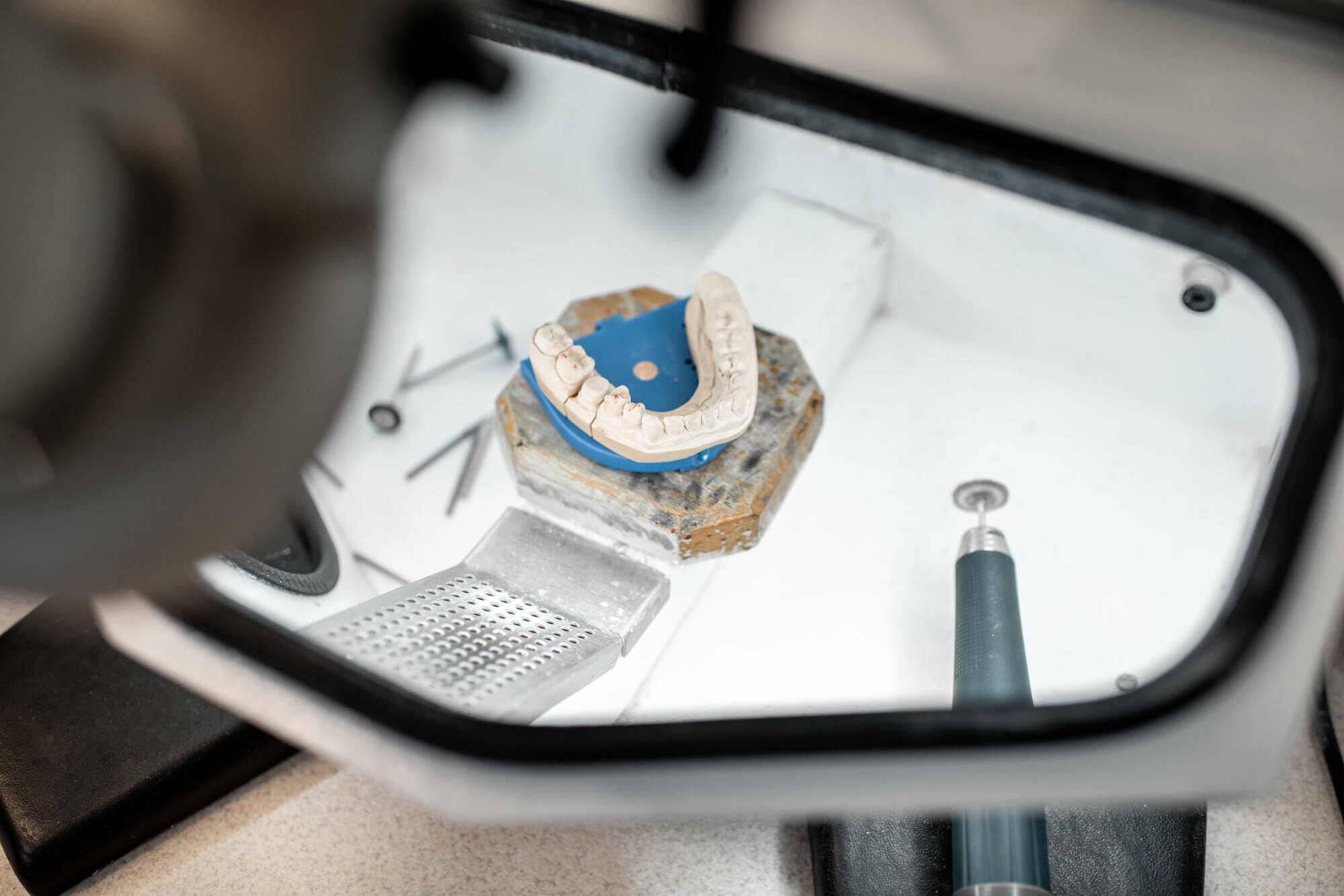
Die unter Aufsicht unseres erfahrenen Zahntechnikermeisters Nikolai Küffner im hauseigenen Dentallabor hergestellten Implantate sind aus hochwertigen Qualitätsmaterialen deutscher Hersteller, versprechen lange Haltbarkeit und werden im eigenen OP-Saal der Praxis schonend eingesetzt. Das garantieren wir schriftlich! Denn alle Implantate aus unserer Praxis enthalten eine 5jährige Garantie.
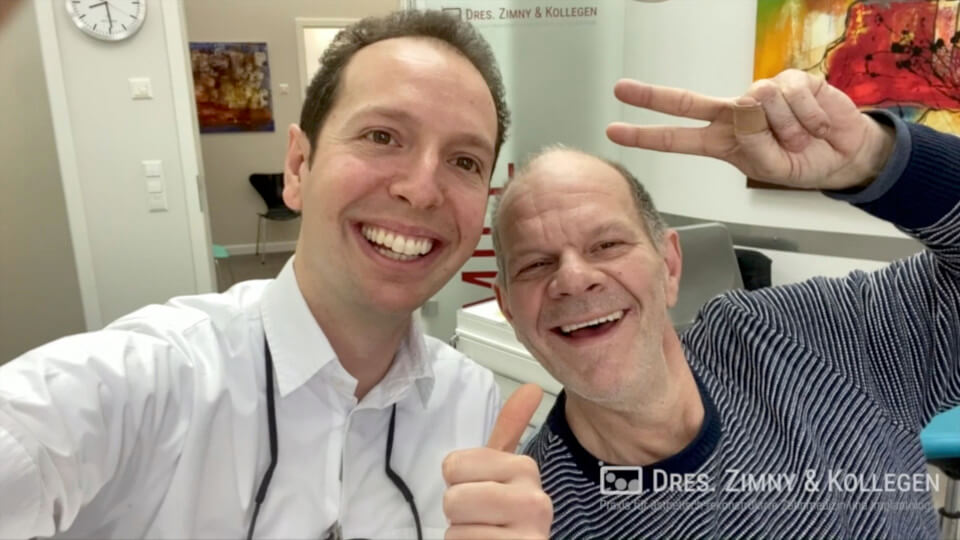
Wie schöne und gerade Zähne Menschen verändern und einfach glücklich machen können. Dr. Burghardt Zimny spricht mit einem seiner Patienten, der seine Implantate nun seit 10 Jahren besitzt. In diesem sehr symphatischen Gespräch geht es aber um viel mehr als nur um schöne Zähne – es geht einfach um ein glückliches Leben.
Vor mehr als 10 Jahren kam Frank L. ohne Zähne in die Praxis in der Uhlandstrasse. In einer beispiellosen Operation erwuchsen aus den zahnlosen Kiefern des emphatischen Berliners ein strahlendes Gebiss mit schönen geraden Zähnen, die bis heute klaglos ihren Dienst tun… und noch viel mehr bewirken.
Der Patient hat seine Lebensfreude wiedergefunden, 160kg ohne Diät abgenommen, seine große Liebe gefunden und auch im Job und seinem privaten Umfeld ging es seitdem nur bergauf.
Einen wesentlichen Anteil daran haben seine Zähne und er erzählt uns im Video, warum das so ist.
Zahnimplantate Zahnarzt Berlin Erklärung zur Barrierefreiheit
We firmly believe that the internet should be available and accessible to anyone, and are committed to providing a website that is accessible to the widest possible audience, regardless of circumstance and ability.
To fulfill this, we aim to adhere as strictly as possible to the World Wide Web Consortium’s (W3C) Web Content Accessibility Guidelines 2.1 (WCAG 2.1) at the AA level. These guidelines explain how to make web content accessible to people with a wide array of disabilities. Complying with those guidelines helps us ensure that the website is accessible to all people: blind people, people with motor impairments, visual impairment, cognitive disabilities, and more.
This website utilizes various technologies that are meant to make it as accessible as possible at all times. We utilize an accessibility interface that allows persons with specific disabilities to adjust the website’s UI (user interface) and design it to their personal needs.
Additionally, the website utilizes an AI-based application that runs in the background and optimizes its accessibility level constantly. This application remediates the website’s HTML, adapts Its functionality and behavior for screen-readers used by the blind users, and for keyboard functions used by individuals with motor impairments.
If you’ve found a malfunction or have ideas for improvement, we’ll be happy to hear from you. You can reach out to the website’s operators by using the following email
Our website implements the ARIA attributes (Accessible Rich Internet Applications) technique, alongside various different behavioral changes, to ensure blind users visiting with screen-readers are able to read, comprehend, and enjoy the website’s functions. As soon as a user with a screen-reader enters your site, they immediately receive a prompt to enter the Screen-Reader Profile so they can browse and operate your site effectively. Here’s how our website covers some of the most important screen-reader requirements, alongside console screenshots of code examples:
Screen-reader optimization: we run a background process that learns the website’s components from top to bottom, to ensure ongoing compliance even when updating the website. In this process, we provide screen-readers with meaningful data using the ARIA set of attributes. For example, we provide accurate form labels; descriptions for actionable icons (social media icons, search icons, cart icons, etc.); validation guidance for form inputs; element roles such as buttons, menus, modal dialogues (popups), and others. Additionally, the background process scans all the website’s images and provides an accurate and meaningful image-object-recognition-based description as an ALT (alternate text) tag for images that are not described. It will also extract texts that are embedded within the image, using an OCR (optical character recognition) technology. To turn on screen-reader adjustments at any time, users need only to press the Alt+1 keyboard combination. Screen-reader users also get automatic announcements to turn the Screen-reader mode on as soon as they enter the website.
These adjustments are compatible with all popular screen readers, including JAWS and NVDA.
Keyboard navigation optimization: The background process also adjusts the website’s HTML, and adds various behaviors using JavaScript code to make the website operable by the keyboard. This includes the ability to navigate the website using the Tab and Shift+Tab keys, operate dropdowns with the arrow keys, close them with Esc, trigger buttons and links using the Enter key, navigate between radio and checkbox elements using the arrow keys, and fill them in with the Spacebar or Enter key.Additionally, keyboard users will find quick-navigation and content-skip menus, available at any time by clicking Alt+1, or as the first elements of the site while navigating with the keyboard. The background process also handles triggered popups by moving the keyboard focus towards them as soon as they appear, and not allow the focus drift outside it.
Users can also use shortcuts such as “M” (menus), “H” (headings), “F” (forms), “B” (buttons), and “G” (graphics) to jump to specific elements.
We aim to support the widest array of browsers and assistive technologies as possible, so our users can choose the best fitting tools for them, with as few limitations as possible. Therefore, we have worked very hard to be able to support all major systems that comprise over 95% of the user market share including Google Chrome, Mozilla Firefox, Apple Safari, Opera and Microsoft Edge, JAWS and NVDA (screen readers).
Despite our very best efforts to allow anybody to adjust the website to their needs. There may still be pages or sections that are not fully accessible, are in the process of becoming accessible, or are lacking an adequate technological solution to make them accessible. Still, we are continually improving our accessibility, adding, updating and improving its options and features, and developing and adopting new technologies. All this is meant to reach the optimal level of accessibility, following technological advancements. For any assistance, please reach out to